
A Leaf Interrupts the Light
Pond Letters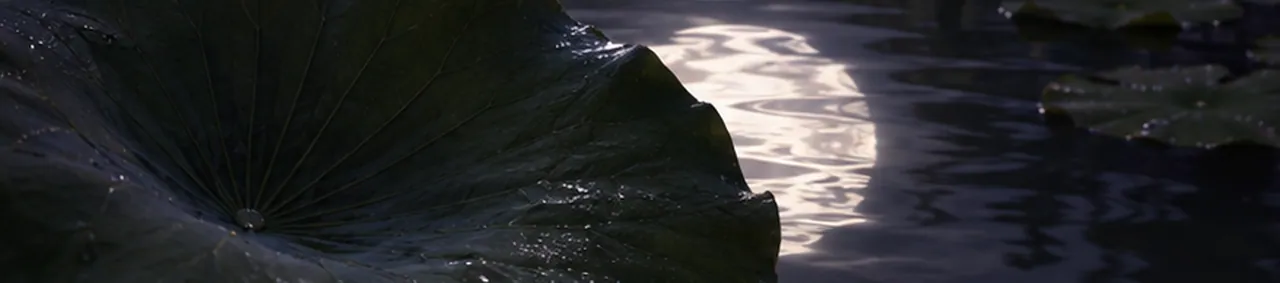
Start a little below the full reflection
The near surface holds a white round shape when the pond is calm. Look down by the first stone and the nearest leaf takes a small bite from its edge. The early scene let the whole reflection disappear almost instantly as another leaf came across. Once the body of that leaf covered the bright area and only a shadow remained, it was difficult to recognize which of the old steps was still visible.
Let a corner of water keep its original position
The current picture preserves a small patch of calm water beside the stone. At first it holds one part of the reflection. The leaf can pass across most of the bright area without covering that corner. The bright part shifts near it and gives the player a stable space with which to compare the dark notch in the leaf. The view still works when the greatest reflection has already traveled into shadow.
Find the low lip of the leaf
The nearest leaf has a long rounded edge and a narrow break on its lower side. Drawn directly from above, the notch looked as bright as the moon itself and became a separate landmark. We moved the highlight to the side where the leaf dips near the water. The notch remains gently outlined when it interrupts the larger shape. In an oblique picture it makes the leaf easier to recognize after the moon has faded.
Compare a second leaf before choosing
In A Leaf With No Moon another dark leaf drifts into the same picture after the first reflection is hidden. It carries a short line of light around the opposite side. The new line can suggest the next step. Look back at where the original bright corner sat against the stone, then see which shape has remained in the same relation to it. The choice should still be possible if the second leaf comes into view a little earlier than the first.
Use the motion to remember more than an outline
In one test the two leaves approach the bright patch at different speeds. The first holds its place toward the bank during a short ripple. The second drifts across the wider area of the reflection. That movement makes each leaf easier to distinguish if the person caught only part of its shape during a turn. Preserve one similar viewpoint before and after the movement so the relation is clear without watching every moment in between.
Bring the upper branches into another view
When the Moon Slips behind a Branch describes the same moon disappearing from above. In that picture the reflection survives a little longer. This observation works in the other direction. The leaf hides the reflected moon locally even while you can see it over the garden. Comparing the branch and the leaf helps designers make the two causes of lost light readable. The player can return to a position where the distance between their effects is visible.
Keep a narrow step away from the largest gap
Early versions of the area put one stone directly in the middle of the reflection. After the leaf passed, the white light returned on both sides of it at once. A more useful step sits a little beside the original bright corner. From there only one section of the reflection returns first. The person can choose to wait there or begin moving before the farther surface becomes clear again. The route still includes a place to turn back.
Record the first shape the player remembers
Pond Letters keeps this note with the earlier watches. On a later test we will show the view after the leaf has already covered the large bright area and ask what shape someone could place from that position. If they find the quiet bright corner and follow it to the darker notch, the earlier scene has enough visible structure to support a second route.