
Leaf Drawer
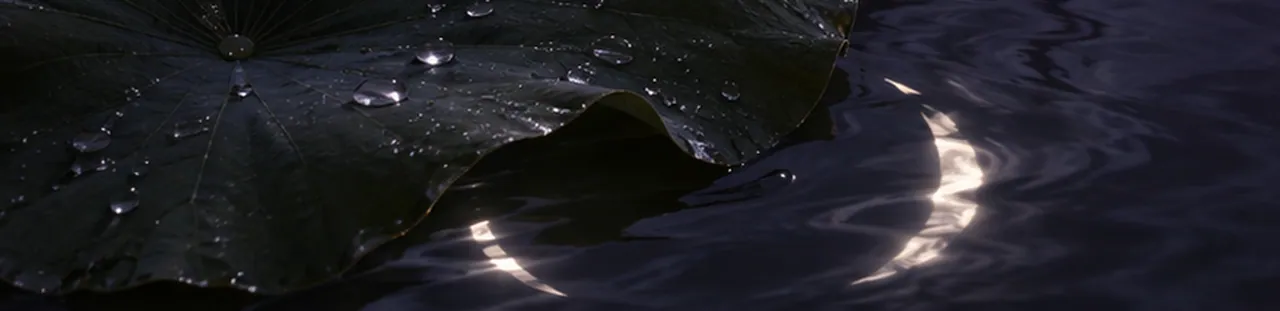
A Leaf With No MoonOpen case file
Order of the crossing
- Watch the left rim become bright.
- Hold while the floating leaf covers it.
- Find a second lit edge before stepping.
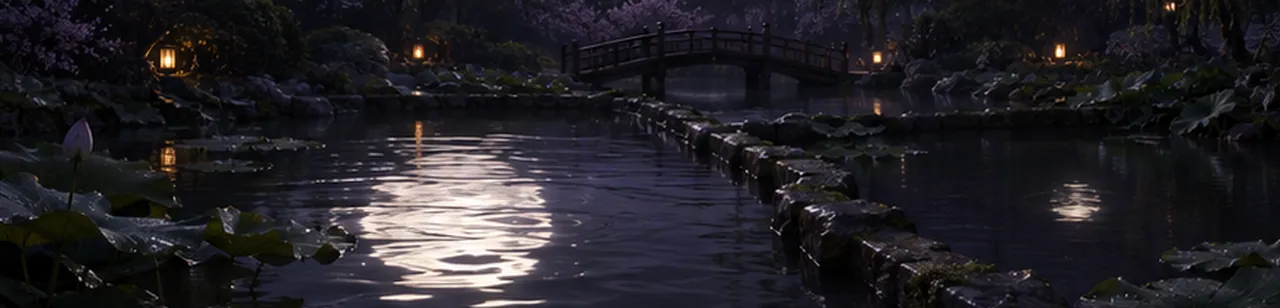
The Second SurfaceOpen case file
Order of the crossing
- Read a soft line near the bridge.
- Follow wind into the other basin.
- Compare where the reflection arrives.
The drawer nearest to the bank
A Leaf With No Moon begins where a small round leaf overlaps a bright reflection. Pull out the case to see the narrow crescent that appears on one side of it. The first part of the crossing gives you a new sightline behind the leaf. A second leaf remains dim in that position. You can look at the pale edge that separates them before deciding whether to take a step or wait for another change.
Another drawer by the bridge
The Second Surface concerns two nearby portions of water that change a little differently. A low bridge gives the player a broad shape to place between them. Looking down, the closer surface is already moving while the farther one retains a quiet patch of moonlight. Move across the first few stones and watch where the farther reflection starts to break.
Read each step at its own scale
The near case uses a small notch and part of the reflected moon to tell two similar leaves apart. The farther case uses the ends of the bridge and a delay in the water. Both become clearer after you have found the part of the pond you are trying to cross. Their views help a person distinguish the movement of a reflection from a change in the actual place visible through it.
Keep one drawer open while checking the other. Compare where the first clear patch appears relative to the next stone before moving on to either case.
Open a record or an earlier detail
Each drawer contains the order of a small decision and links to the longer game concept. A Leaf Interrupts the Light follows the breaking reflection closer to the near side. Wind Reaches the Second Basin follows one change later across the bridge. Pond Letters shows which issue holds each study, along with two other views where the far and near surfaces can be compared.